JUDICIARY
•
2311 views
When temple of Justice becomes a theatre of frustration
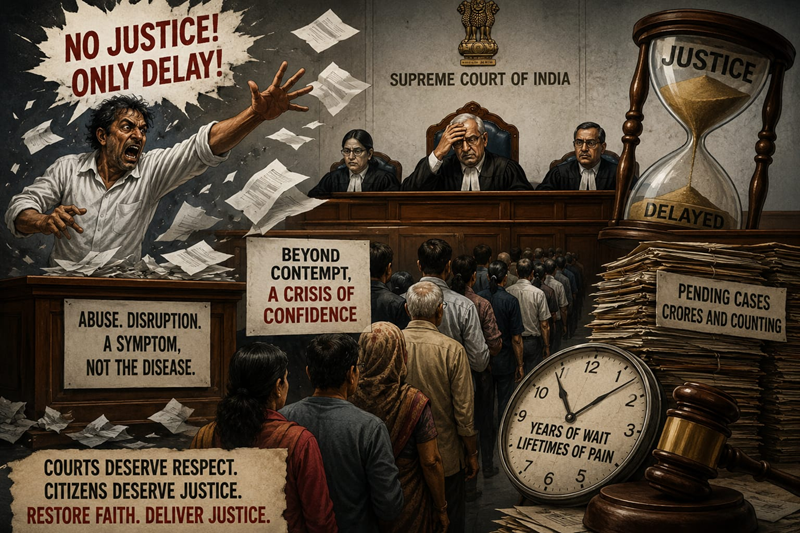
A litigant throwing papers inside the Supreme Court and hurling abuses at the Chief Justice is not merely an episode of courtroom indiscipline. It is a disturbing reflection of something deeper—a growing frustration with the justice delivery system. Such conduct deserves unequivocal condemnation. Courts cannot function if litigants resort to intimidation or disorder. Yet, dismissing the incident as the misconduct of one individual would be missing the larger picture.
For decades, the Indian judiciary has commanded enormous public respect because it represented the citizen's last hope. Increasingly, however, that hope is being tested. Endless adjournments, mounting pendency, prolonged uncertainty and the emotional and financial burden of litigation leave many litigants feeling exhausted long before their cases are decided. While the overwhelming majority continues to maintain faith in the institution, some inevitably reach a breaking point.
Nothing can justify abusing judges or disrupting court proceedings. Civilised societies resolve disputes through institutions, not through anger. Nevertheless, institutions must also ask what drives an ordinary citizen to lose faith so completely that decorum gives way to desperation.
The Supreme Court reportedly chose not to initiate proceedings against the litigant, preferring restraint over punishment. The gesture reflects judicial compassion. However, compassion towards one individual should not divert attention from the systemic issues that such incidents expose. The episode should serve as an alarm bell rather than a passing headline.
Respect for courts cannot be secured merely through the power to punish for contempt. It is sustained by timely justice, reasoned decisions, predictable procedures and the confidence that every litigant has genuinely been heard. Institutional authority is strongest when citizens voluntarily accept judicial outcomes because they trust the process, even when they lose.
The incident should therefore not be viewed solely as an attack on the dignity of the Supreme Court. It should also be viewed as a warning signal from a justice system under immense strain. Every outburst in a courtroom is unacceptable. But every such outburst should also compel introspection. If citizens are increasingly leaving courts with anger instead of confidence, the problem extends beyond individual behaviour.
The dignity of the judiciary is indispensable. Equally indispensable is the judiciary's continuous effort to restore public confidence by making justice not only fair, but also accessible, timely and responsive. The real lesson from this unfortunate episode is not about one unruly litigant. It is about ensuring that no citizen feels so overwhelmed by the justice system that frustration replaces faith.
For decades, the Indian judiciary has commanded enormous public respect because it represented the citizen's last hope. Increasingly, however, that hope is being tested. Endless adjournments, mounting pendency, prolonged uncertainty and the emotional and financial burden of litigation leave many litigants feeling exhausted long before their cases are decided. While the overwhelming majority continues to maintain faith in the institution, some inevitably reach a breaking point.
Nothing can justify abusing judges or disrupting court proceedings. Civilised societies resolve disputes through institutions, not through anger. Nevertheless, institutions must also ask what drives an ordinary citizen to lose faith so completely that decorum gives way to desperation.
The Supreme Court reportedly chose not to initiate proceedings against the litigant, preferring restraint over punishment. The gesture reflects judicial compassion. However, compassion towards one individual should not divert attention from the systemic issues that such incidents expose. The episode should serve as an alarm bell rather than a passing headline.
Respect for courts cannot be secured merely through the power to punish for contempt. It is sustained by timely justice, reasoned decisions, predictable procedures and the confidence that every litigant has genuinely been heard. Institutional authority is strongest when citizens voluntarily accept judicial outcomes because they trust the process, even when they lose.
The incident should therefore not be viewed solely as an attack on the dignity of the Supreme Court. It should also be viewed as a warning signal from a justice system under immense strain. Every outburst in a courtroom is unacceptable. But every such outburst should also compel introspection. If citizens are increasingly leaving courts with anger instead of confidence, the problem extends beyond individual behaviour.
The dignity of the judiciary is indispensable. Equally indispensable is the judiciary's continuous effort to restore public confidence by making justice not only fair, but also accessible, timely and responsive. The real lesson from this unfortunate episode is not about one unruly litigant. It is about ensuring that no citizen feels so overwhelmed by the justice system that frustration replaces faith.


.jpeg)