Role Of Women In PSEs Undergoes A Significant Transformation: Nirja Saraf
HAL plays a critical role as stabilizers in the healthcare ecosystem
Across various key sectors, there is a notable male predominance. Within the Public Sector Enterprises (PSEs), Government of India, opportunities for women to demonstrate their capabilities have been limited.
However, women who have been entrusted with significant responsibilities are emerging as dynamic leaders through their dedication, determination, and commitment.
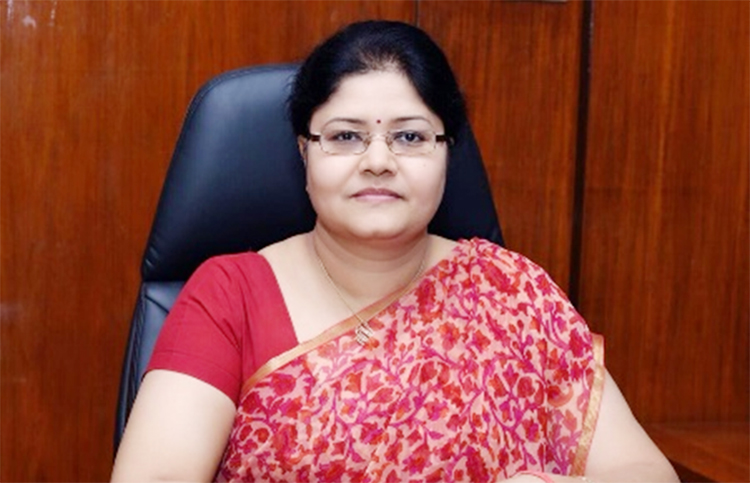
Bureaugram.com recently came across one of such female leaders who shared her journey of perseverance. Ms Nirja Saraf, who took on the mantle of Managing Director, Hindustan Antibiotics Limited (HAL), October 1, 2016, speaks at length on the role of women and their leaderships in Public Sector Enterprises (PSEs).
1. How would you describe the evolving role of women in Public Sector Enterprises (PSEs) today?
Women in PSEs today are increasingly moving beyond traditional support roles to positions of strategic influence. We see more women leading critical functions—finance, operations, R&D, and even board-level decision-making. The evolving role is not just about representation; it’s about shaping policy, driving innovation, and ensuring inclusivity in organizations that serve the nation. Importantly, women in PSEs are bringing a collaborative leadership style that balances efficiency with empathy, which is vital in enterprises that have both commercial and social mandates.
The role of women in Public Sector Enterprises has undergone a significant transformation over the past decade. Women are no longer confined to support functions; they are increasingly taking on strategic, management, technical, and leadership roles. This shift reflects broader societal changes, improved access to education, and a conscious push toward diversity and inclusion within government-owned enterprises. Today, women in PSEs are contributing to policy formulation, operational excellence, and innovation, thereby shaping the future trajectory of these organizations.
2. How do you see leadership in PSEs differing from leadership in the private sector, particularly from a gender perspective?
Leadership in PSEs is inherently multidimensional, as it must balance commercial viability with social responsibility. Unlike the private sector, where profitability is often the primary metric, PSE leaders must also align with national priorities and public welfare goals. From a gender perspective, women leaders in PSEs often bring a collaborative, inclusive, and empathetic leadership style, which is particularly valuable in navigating complex stakeholder environments. However, the structured and policy-driven nature of PSEs can sometimes slow the pace of change compared to the private sector.
3. As MD of a public sector pharma enterprise, how do you align commercial objectives with public health priorities?
In a public sector pharma enterprise, commercial objectives and public health priorities are not mutually exclusive—they are complementary. Our approach is to ensure financial sustainability while fulfilling our mandate of serving public health needs.
This involves prioritizing the production of essential and life-saving medicines, maintaining affordability, and ensuring consistent supply, especially during public health emergencies. Strategic partnerships, efficient resource utilization, and process optimization help us strike this balance effectively.
We supply life-saving medicines to Government Institutions, Hospitals, Defence & ESIC etc. as PPP rates, which are fixed by Government of India.
4. What role do PSEs like Hindustan Antibiotics play in ensuring affordable and accessible healthcare in India?
PSEs like Hindustan Antibiotics Limited play a critical role as stabilizers in the healthcare ecosystem. We act as a reliable source of essential medicines, particularly antibiotics and life-saving drugs, often stepping in where market dynamics may not favor affordability or accessibility. During crises, such as pandemics or supply chain disruptions, PSEs ensure uninterrupted availability of critical medicines. Our focus on cost-effective production and adherence to quality standards enables us to serve large sections of the population, including underserved communities.
During the global pandemic, we initiated for manufacturing of Hand Sanitizer, HCC Machines (i.e Health ATM, which measure more than 50 parameters of human body in 5 minutes).
HAL has also diversified and initiated for following segments/ products:
(i) Sanitary Napkins with the Brand Name ‘TITLI’
(ii) Napthalene Balls
(iii) Povidone Iodine Spray 5% W/W
(iv) Povidone Iodine Spray 10% W/W
(v) Povidone Iodine Non Adherent Dressing
(vi) Diclofenac Diethylamine, Linseed Oil, Methyl Salicylate and Menthol Spray
(vii) Pregnancy induce hypothyroidism (PIH) Cap’
(viii) Anti Snake Venom Serum (Under Development)
(ix) Snake Venom Detection Kit
(x) Surgicals/ Diagnostic Products
(xi) Ayurvedic Products
HAL has also established Pradhan Mantri Bhartiya Jan AUshadhi Kendra in various AIIMS, Govt Hospitals to provide quality medicines to poor people at affordable rates.
5. Despite progress, women remain underrepresented at senior levels in many PSEs. What systemic changes are needed to address this?
Addressing this imbalance requires a multi-pronged approach. Firstly, there must be a stronger pipeline of women candidates through targeted recruitment and leadership development programs. Secondly, organizations need to implement transparent promotion policies and eliminate unconscious biases in evaluation processes. Thirdly, work-life balance initiatives—such as flexible work arrangements and robust childcare support—are essential to retain talented women. Lastly, mentorship and sponsorship programs can play a vital role in preparing women for senior leadership roles.
6. How can organizations foster a culture that supports women leaders, especially in traditionally male-dominated sectors like pharma?
Creating a supportive culture begins with leadership commitment. Organizations must actively promote diversity as a strategic priority rather than a compliance requirement. This includes building inclusive policies, encouraging open dialogue, and recognizing diverse leadership styles. Providing equal opportunities in high-impact roles, ensuring safe and respectful workplaces, and highlighting successful women leaders as role models can significantly influence organizational culture. Training programs to address unconscious bias are also crucial in fostering inclusivity.
7. What role can policy frameworks and institutions play in accelerating gender diversity in PSE leadership?
Policy frameworks and institutions can act as powerful enablers by setting clear diversity targets, encouraging gender-balanced boards, and mandating transparent reporting on gender metrics. Government-led initiatives can also incentivize organizations to adopt best practices in diversity and inclusion. Additionally, institutions can facilitate leadership development programs specifically designed for women, creating a strong talent pipeline for future leadership roles in PSEs.
8. What advice would you give to young women aspiring to build leadership careers in PSEs?
My advice would be to remain focused, resilient, and continuously invest in your professional development. Build strong domain expertise, as technical and functional excellence forms the foundation of leadership. Seek out mentors, embrace challenges, and do not hesitate to take on roles outside your comfort zone. Equally important is to believe in your capabilities and assert your voice with confidence. Public Sector Enterprises offer a unique opportunity to contribute to nation-building, and women should actively seize these opportunities to make a meaningful impact.
ABOUT HINDUSTAN ANTIBIOTICS LIMITED
Hindustan Antibiotics Limited (HAL) having its registered office and manufacturing plant at Pimpri, Pune is a Central Public Sector Enterprise under the Administrative Control of Department of Pharmaceuticals, Ministry of Chemicals & Fertilizers, Govt. of India. HAL is engaged in the manufacturing and supplying the life saving drugs in the human pharma, Animal Husbandry, Agriculture Products and Medical Devices etc. to Govt Institutions/hospitals, Defence, Railway and ESI etc.
HAL is the first drug manufacturing company to be set up in the Public Sector by Govt of India in the year 1954 with active co-operation of WHO and UNICEF.
Apart from manufacturing bulk drugs, HAL, diversified into formulation manufacture. The Company has facility to manufacture various dosage forms, like Injectables, Capsules, Tablets, Large Volume Parentals and Liquid Orals etc.
HAL also diversified into Veterinary and Agriculture Segments, and manufacturing number of products. HAL has dry powder injectable manufacturing.
The products manufactured by HAL, are at par with international standards. Quality is built into the system with emphasis on stability and bio-availability studies, in process control and quality assurance. Highly skilled and trained staff monitors the functions with care to the minutest details.
Apart from Manufacturing of Pharmaceuticals and Veterinary Products, HAL is engaged in following Sectors also:
1. HAL Cloud Clinic (HCC-Health ATM):
A digital health platform or kiosk measures more than 50 parameters of human body and provide online consultation, health services, and possibly telemedicine facilities. It may offer services like:
- Online doctor consultations, Health monitoring, Medical records management, Medicine delivery, Diagnostic services

2. Alcoholic Hand Disinfectant (AHD) - HALRUB/HANDRUB:
A hand sanitizer product for effective hand hygiene, likely containing alcohol as the active ingredient. It is designed to:
- Kill germs and microorganisms, Prevent the spread of infections, Moisturize and protect the skin AHAHD

3. Sanitary Napkins
A brand of sanitary napkins catering to women's hygiene needs, offering:
- Comfort and protection
- Absorbency and leak-proof design
- Hygiene and freshness
4. Napthalene Balls:
Mothballs used for protection against insects and pests in clothing storage, containing naphthalene as the active ingredient. They're designed to:
- Repel moths and other pests
- Protect clothing and fabrics
- Provide long-lasting freshness

5. Povidone Iodine Spray 5% W/W:
An antiseptic solution for skin disinfection and wound care, containing 5% povidone iodine. It is used to:
- Prevent infection and promote healing, Clean and disinfect wounds, Prepare skin for medical procedures

6. Povidone Iodine Spray 10% W/W:
A stronger concentration of povidone iodine for more severe skin infections or specific medical applications, containing 10% povidone iodine. It is used to:
- Treat severe skin infections, Disinfect skin and mucous membranes, Prepare skin for surgical procedures

7. Povidone Iodine Non Adherent Dressing:
A wound dressing coated with povidone iodine, designed not to stick to the wound. It's used to:
- Protect wounds from infection
- Promote healing
- Provide a comfortable and non-sticky dressing
8. Diclofenac Diethylamine, Linseed Oil, Methyl Salicylate and Menthol Spray:
A topical analgesic spray for pain relief, likely used for muscle and joint pain. It's designed to:
- Relieve pain and inflammation
- Reduce muscle spasms
- Provide a cooling and soothing sensation
9. Pregnancy induce hypothyroidism (PIH) Cap:
Possibly a product or supplement related to managing hypothyroidism during pregnancy.

10. Anti Snake Venom Serum (Under Development):
An antivenom being developed to treat snake bites, aiming to:
- Neutralize snake venom, Prevent venom spread, Save lives
11. Snake Venom Detection Kit:
A diagnostic tool for identifying snake venom in a bite victim, helping to:
- Identify the snake species, Guide treatment, Provide timely intervention

12. Surgicals/Diagnostic Products:
A range of products used in surgical procedures and diagnostic testing, including:
- Surgical gloves
- Surgical masks
- Diagnostic kits
- Medical devices
13. Ayurvedic Products:
Traditional Indian medicine products, possibly including herbal supplements, ointments, or other formulations, aiming to:
- Promote health and wellness, Treat various ailments, Provide natural and holistic care.


.jpeg)